


CosMx Same-Cell Multiomics
Same-Cell Multiomics with RNA and Protein for unlimited spatial exploration
CosMx® Same-Cell Multiomics combines whole-transcriptome RNA imaging with high-plex protein detection in the same tissue section—at single-cell and subcellular resolution. This enables researchers to connect molecular programs with protein phenotype, cellular state, and tissue architecture to investigate biology directly in its native spatial context.
Knit pathway and protein layers within every cell to make deeper and disruptive discoveries.
- Whole-transcriptome RNA
Image > 19,000 RNA targets in Human and >21,000 RNA targets in Mouse at single cell and subcellular resolution - High-plex protein
Add 64+ protein-based phenotypic information to complement transcriptomic measurements - Same-cell integration
Reveal pathway–protein spatial relationships within the same cell - Native tissue context
Orthogonally validate biomarkers on the same tissue section and incorporate tissue architecture into spatial analyses, providing a more complete understanding of tissue biology
Why RNA + protein?
RNA and protein provide complementary views of complex biology. Understanding biology requires connecting transcriptional information to the proteins that execute cellular function and define phenotype.
When both are measured in the same cell and in their spatial context, researchers can develop a more complete understanding of disease biology.
| RNA | Protein | Together |
| Gene expression | Protein expression | Biomarker validation |
| Cell-state signatures | Functional markers | Cell-state characterization |
| Ligand/receptor transcripts | Protein co-localization | Spatial interactions |
| Pathway-associated genes | Protein markers | Pathway-level biology |
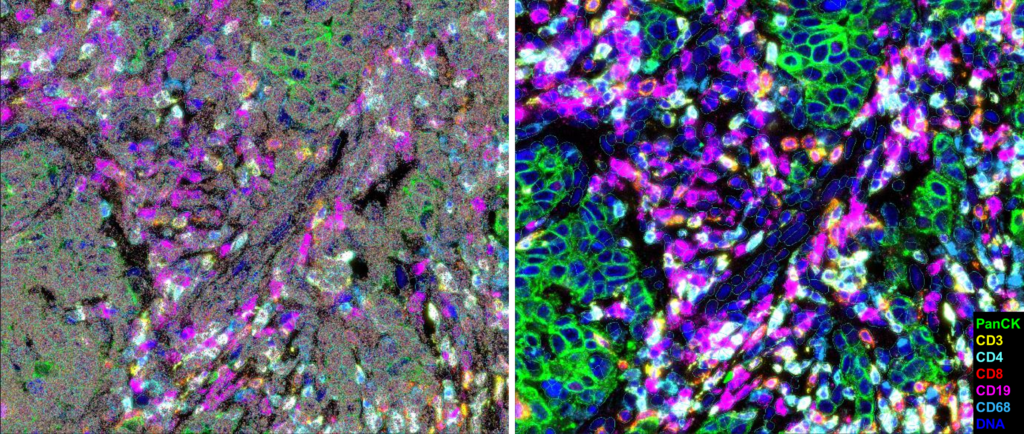
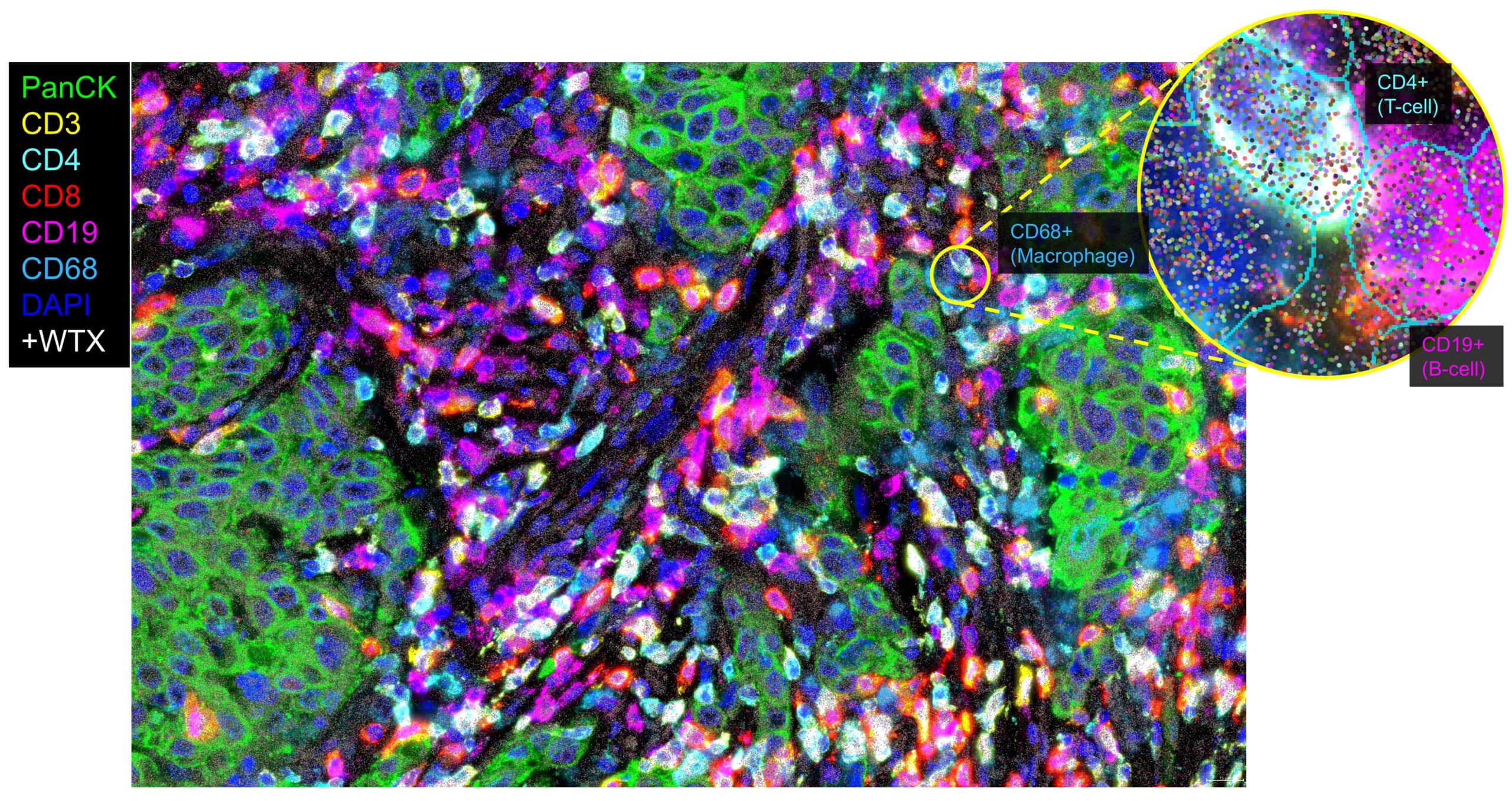
Explore same-cell multiomics in human breast cancer FFPE tissue
The CosMx Spatial Molecular Imager (SMI) Same-Cell Multiomics workflow is the only solution to enable detection of over 21,000 RNA and over 64 proteins, all within the same FFPE tissue section.
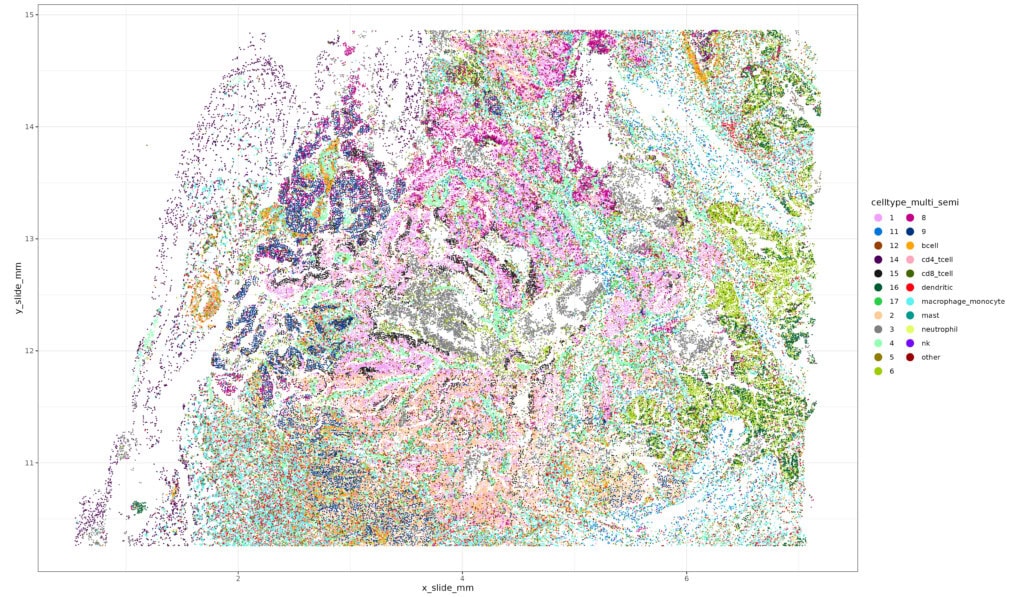
With the CosMx SMI we characterized human breast cancer FFPE tissue with both the 64-plex CosMx Human Immuno-Oncology Protein panel, and the over 19,000-plex CosMx Whole transcriptome Assay on the same slide. This workflow delivers whole transcriptome and high-plex protein data at subcellular resolution, allowing scientists to move beyond inferring biology from cell types to directly making biological insights using a pathway-centered approach.
Designed for your spatial biology research needs
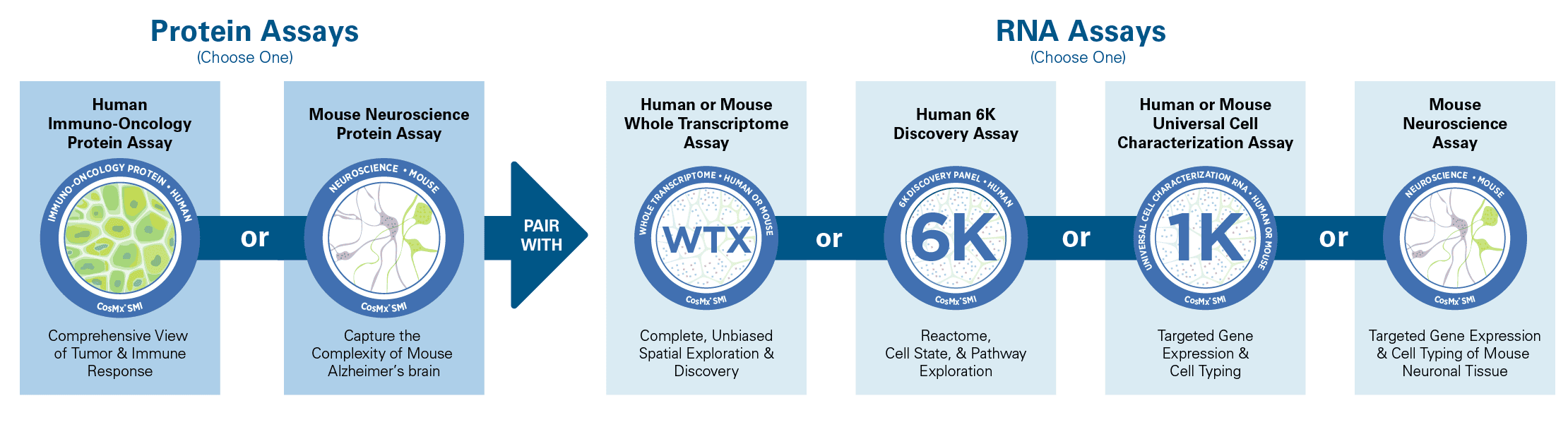
Choose the CosMx RNA assay and CosMx protein assay that match your research question—from targeted discovery to whole-transcriptome, giving you the flexibility to design experiments without compromise.

How It Works
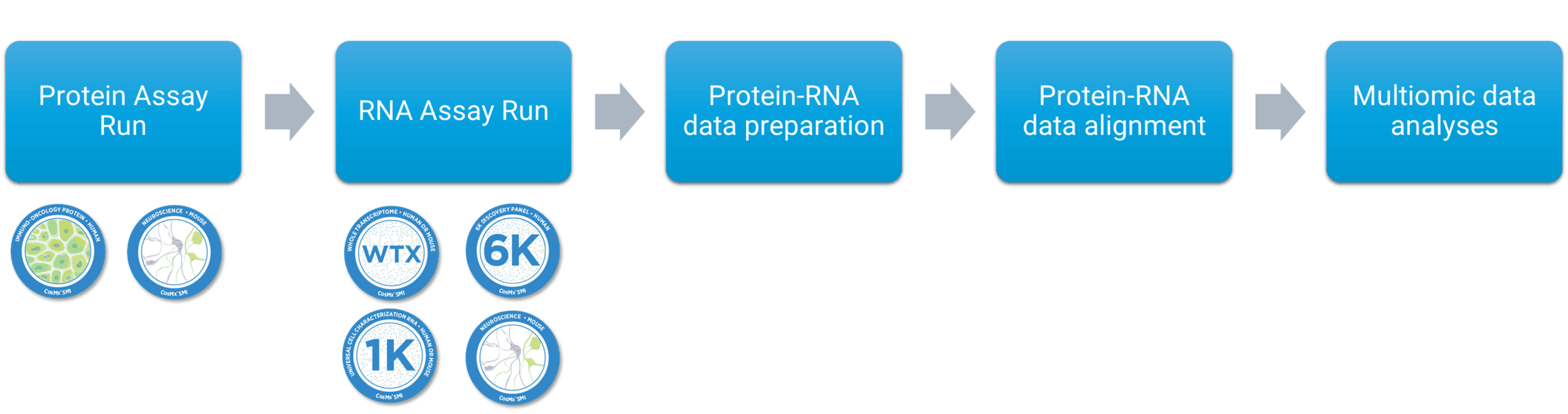
Combine transcriptomic and protein information in the same cell to strengthen cell phenotyping, validate biomarkers, and uncover biological insights with integrated spatial analysis.
Applications
Identify cell types and states with greater accuracy by combining transcriptomic profiles with protein expression in the same cell.
Confirm candidate biomarkers directly in tissue by aligning protein detection with RNA expression at subcellular resolution.


Map cellular heterogeneity and cell-cell interactions within their native environment by analyzing RNA and protein together within intact tissue.

Related Resources


Request a Quote
Contact our helpful experts and we’ll be in touch soon.
FAQs
What is CosMx Same-Cell Multiomics?
CosMx Same-Cell Multiomics combines whole-transcriptome RNA imaging with high-plex protein detection in the same tissue section. It enables researchers to measure RNA and protein at single-cell and subcellular resolution, connecting molecular programs with protein phenotype, cellular state, and tissue architecture in native spatial context.
What are the benefits of measuring RNA and protein in the same cell?
RNA and protein provide complementary views of complex biology. Measuring both in the same cell and within the same tissue section enables researchers to connect transcriptional information with the proteins that execute cellular function and define phenotype. This integrated view can help reveal pathway–protein spatial relationships and provide a more complete understanding of tissue biology.
How many RNA and protein targets can be imaged with CosMx Same-Cell Multiomics workflow?
CosMx Same-Cell Multiomics enables imaging of more than 19,000 RNA targets in human tissue and more than 21,000 RNA targets in mouse tissue, together with 64+ protein-based phenotypic markers. This combination provides whole-transcriptome and high-plex protein information in every cell.
Can CosMx Same-Cell Multiomics be used with FFPE tissue?
Yes. The CosMx Same-Cell Multiomics workflow enables detection of whole-transcriptome RNA and high-plex protein information within the same FFPE tissue section. For example, human breast cancer FFPE tissue has been characterized using the CosMx Whole Transcriptome Assay together with the 64-plex CosMx Human Immuno-Oncology Protein panel, preserving native tissue context for integrated spatial analysis.
How does CosMx Same-Cell Multiomics support spatial biology research?
CosMx Same-Cell Multiomics combines transcriptomic and protein information within the same cell while preserving tissue architecture. Researchers can use integrated spatial analysis to strengthen cell phenotyping, validate biomarkers, investigate biological pathways, and uncover relationships between molecular programs, protein phenotype, cellular state, and tissue organization.