


Resource Type: Blog
Blog
Tips to optimize sample prep for highly autofluorescent samples on CosMx® SMI
The CosMx® Spatial Molecular Imager (SMI) instrument performs fluorescent imaging to read out in-situ hybridized fluorescent reporters which uniquely identify RNA transcripts. The presence of tissue autofluorescence background may reduce…
Blog
Moving Beyond scRNA-seq: The Power of CosMx Whole Transcriptome
Compare CosMx SMI versus scRNA-seq and see how spatial transcriptomics reveals more biology in intact tissue and with subcellular resolution.
Blog
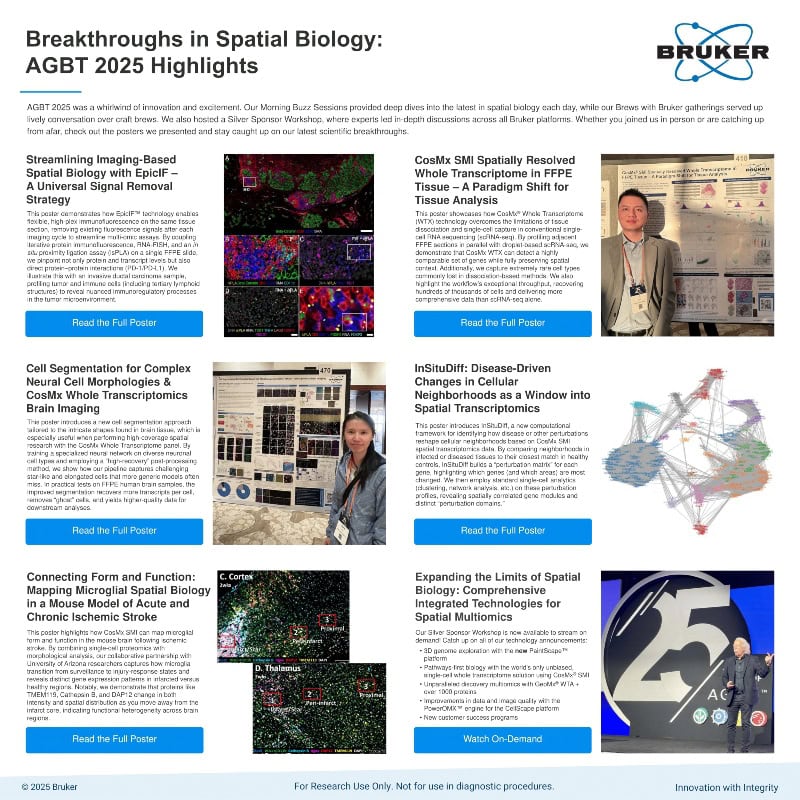
Breakthroughs in Spatial Biology: AGBT 2025 Highlights
Discover the future of spatial biology! Read about our AGBT 2025 eBook featuring posters highlighting powerful new breakthroughs EpicIF, CosMx WTX, and InSituDiff, plus on-demand workshop access.
Blog
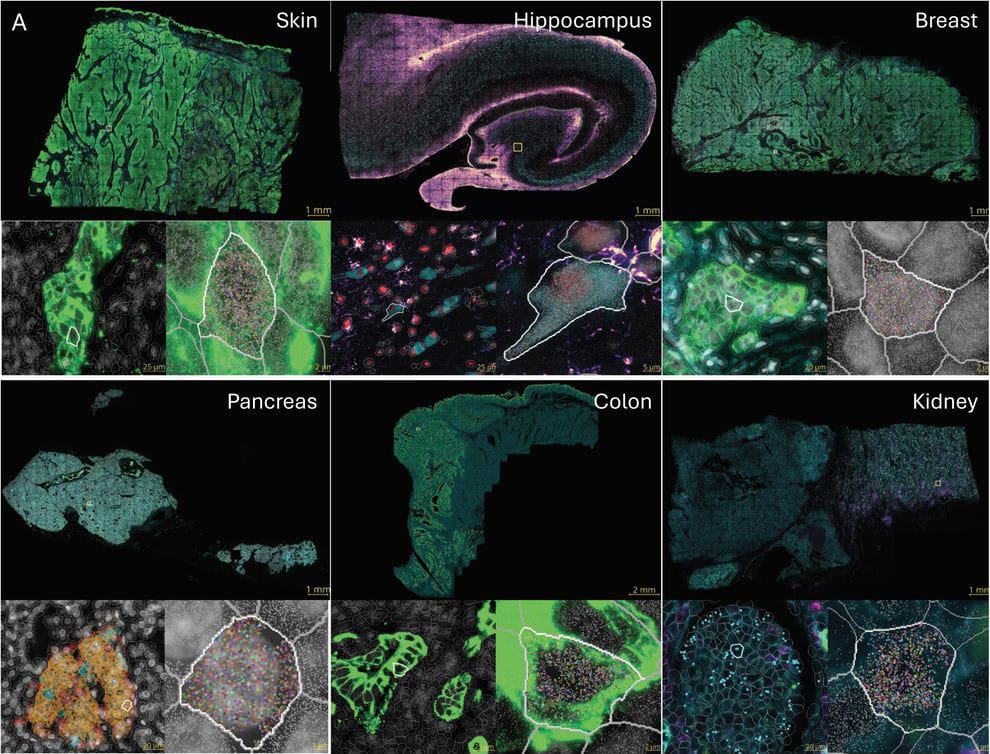
Revealing Spatial Biology at Whole-Transcriptome Scale: Introducing the CosMx® Human Whole Transcriptome Panel
Learn how CosMx WTX brings whole-transcriptome coverage to every cell in FFPE tissues, uncovering truly groundbreaking spatial biology.
Blog
March 2025 Newsletter
AGBT 2025 was a whirlwind of innovation and excitement. Our Morning Buzz sessions provided deep dives into the latest in spatial biology each day, while our Brews with Bruker gathering…
Blog
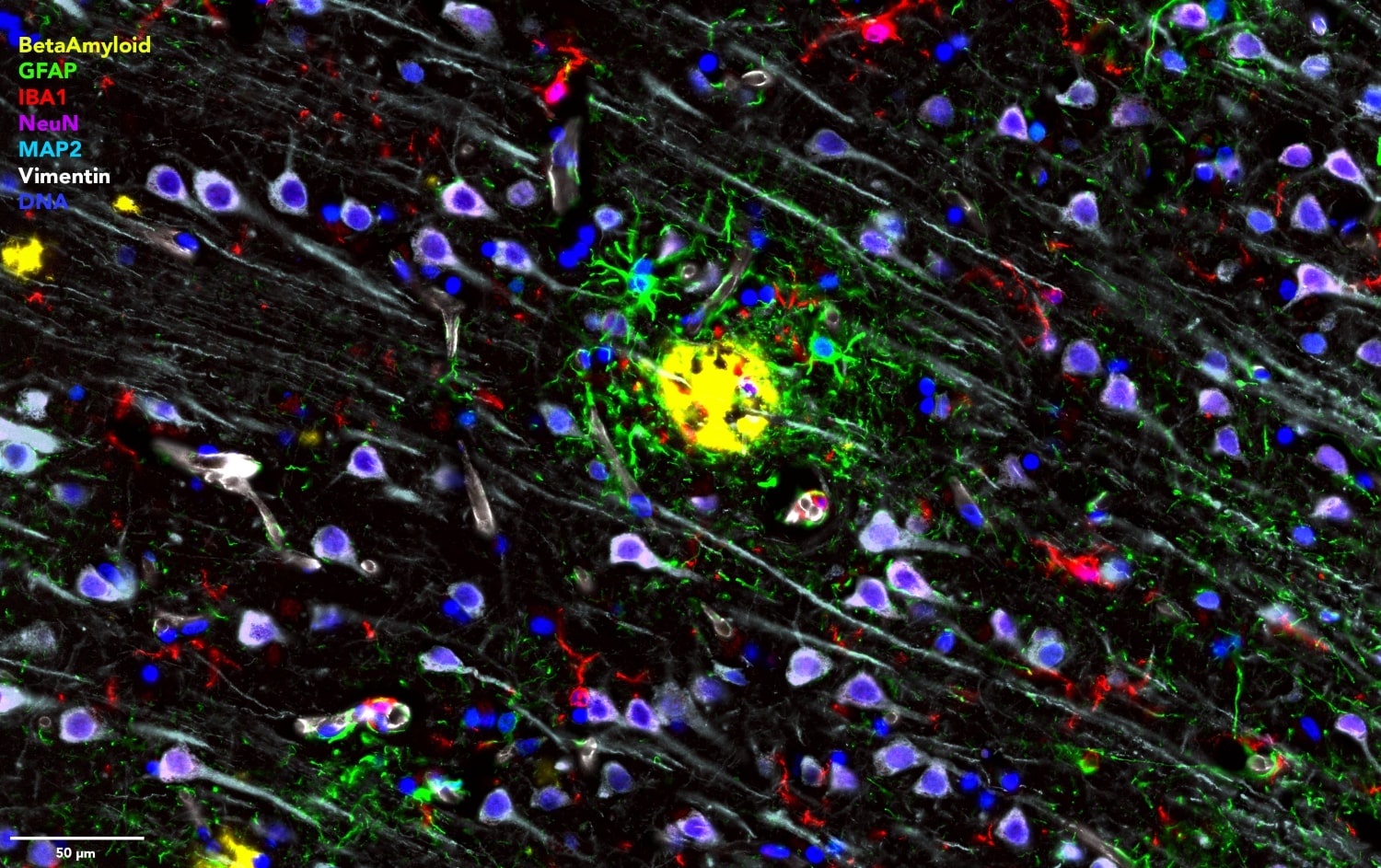
Miranda Orr’s Spatial Analyses from Discovery to Validation Reveal Key Processes in Alzheimer’s Disease
Discover Dr. Miranda Orr’s cutting-edge spatial multiomics research in neuroscience, revealing new Alzheimer’s disease processes with advanced proteomic tools.

Blog
February 2025 Newsletter
The field of spatial biology continues to push the boundaries of discovery, transforming how we understand complex biological systems at a spatial resolution. From cancer research to neuroscience, the ability…

Blog
December 2024 Newsletter
We’re excited to bring you the latest updates, innovations, and resources in spatial biology. From cutting-edge technologies to global milestones, here’s what’s new in the world of Bruker Spatial Biology.…
Blog
Introducing Enhanced Photobleaching in Cyclic Immunofluorescence for Spatial Biology
FFPE tonsil, captured on the CellScape Platform with EpicIF Technology. Bruker Spatial Biology is pleased to introduce EpicIF™ signal removal technology for the CellScape™ Precise Spatial Proteomics platform. EpicIF technology empowers high-plex…
Blog
Research Spotlight: Mara De Martino Leveraging the CellScape platform and MALDI for Glioblastoma Research
In a recent presentation, Mara De Martino, PhD, a postdoc in Dr. Claire Vanpouille-Box's lab in the Weill Cornell Medicine radiation oncology department, shared her research on radiotherapy-treated glioblastoma, leveraging…
Blog
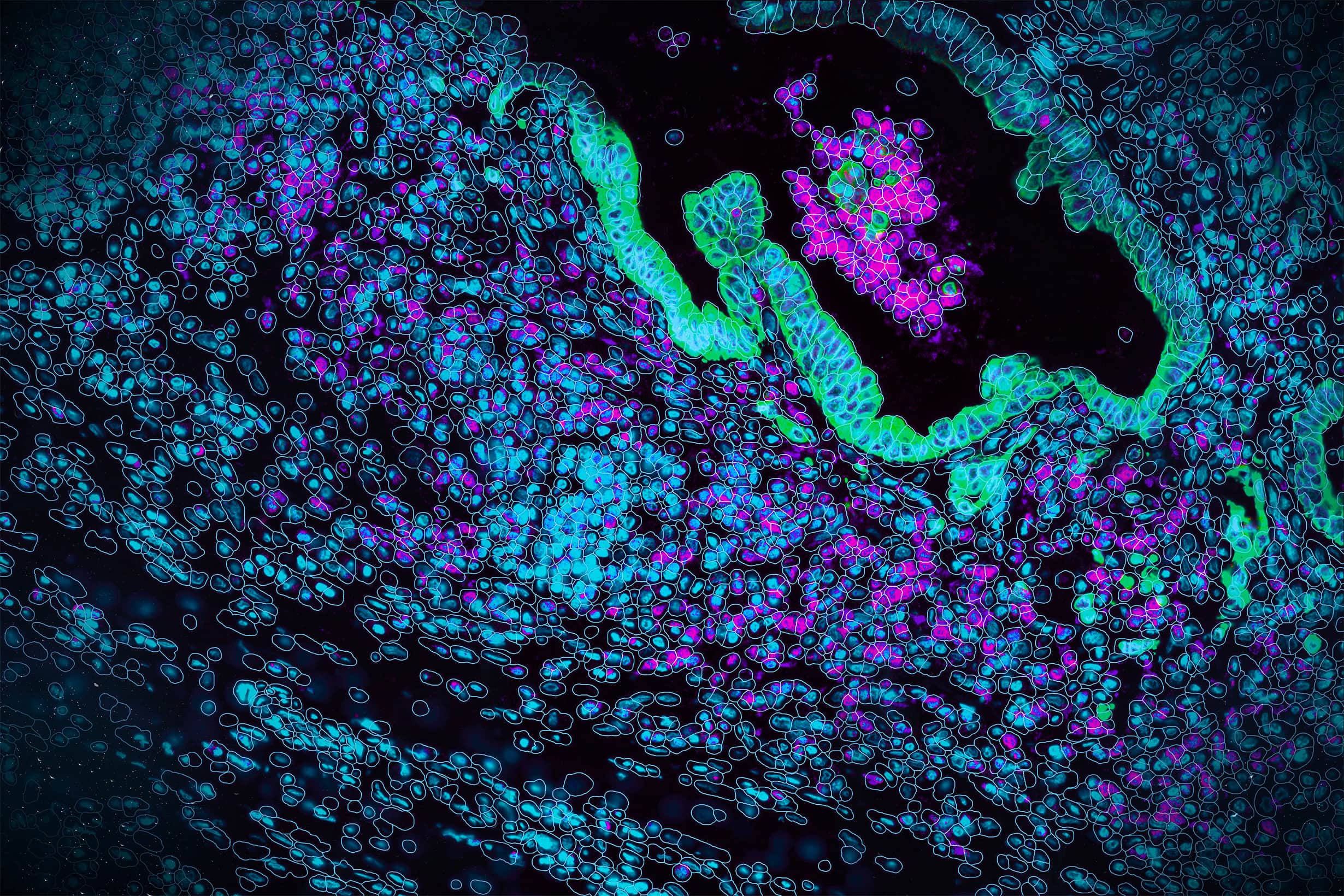
Tips when performing CosMx® data analysis with AtoMx SIP
Single-cell spatial biology opens doors to unprecedented scientific questions requiring the development of new computational workflows and approaches to analyze and interpret data. Whether you are new to single-cell spatial…
Blog
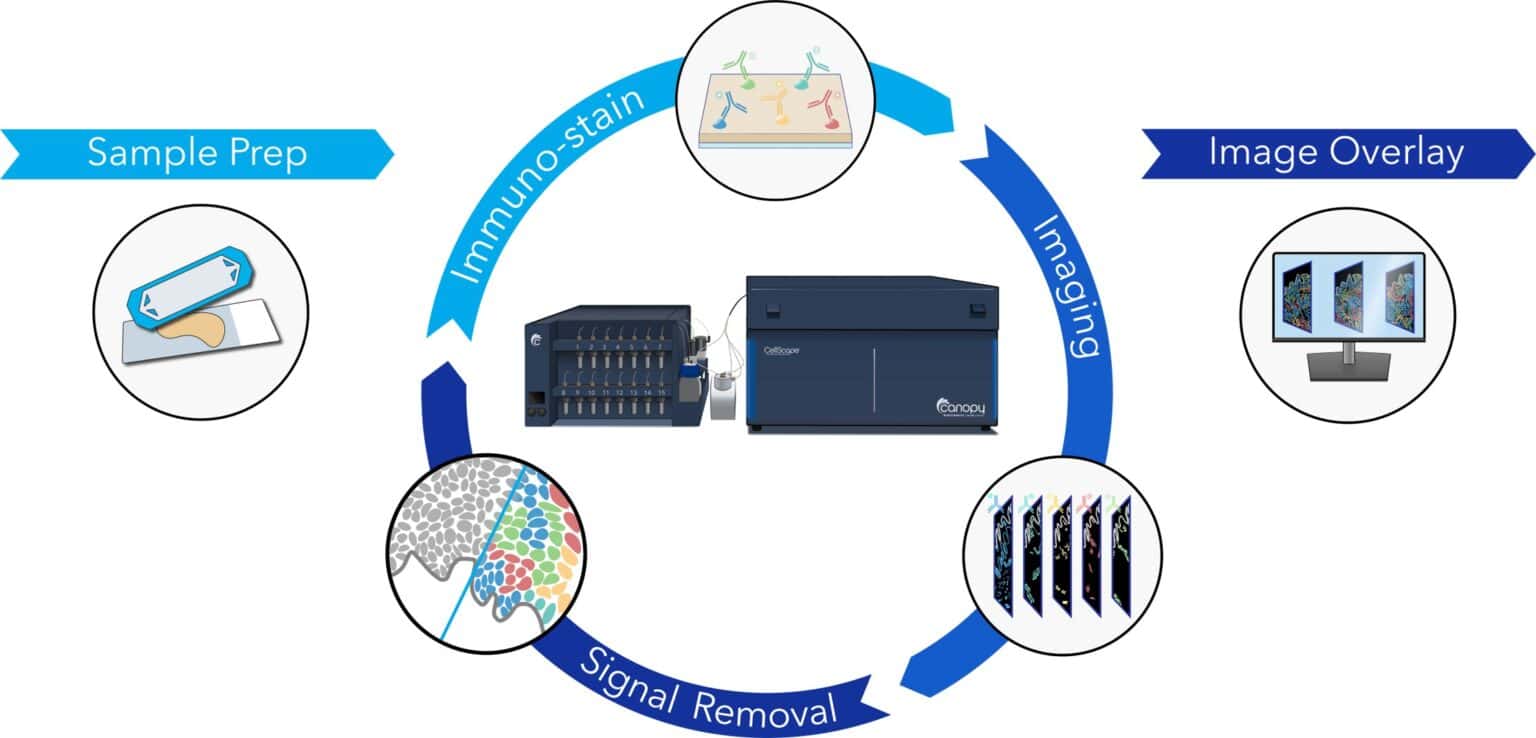
Photobleaching as a Signal Removal Tool in Multiplex Fluorescence Imaging
In fluorescence microscopy, fluorophores absorb light at specific wavelengths. This absorption leads to the excitation of the fluorophore’s electrons. When the electrons return to the ground state, it dissipates that…